<strong>A Comprehensive Guide Tailored for Procurement Decision-Makers and Designers</strong>
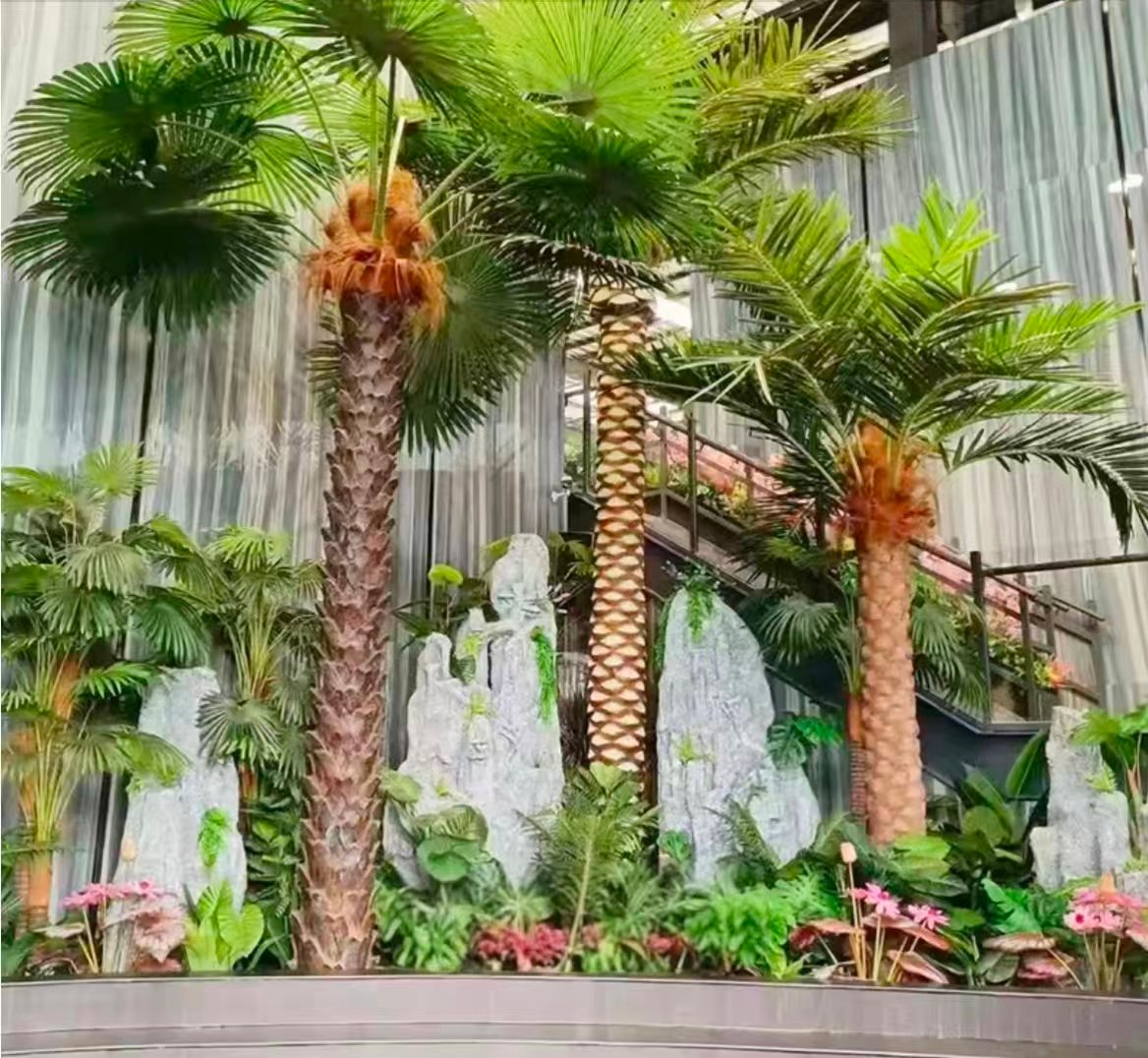
In commercial design, greenery is no longer just a decorative element. It has become a key factor in shaping brand identity, improving customer experiences, and increasing the overall value of a space.
Whether it is the lobby of a luxury hotel, the atrium of a shopping mall, or the outdoor garden of a trendy restaurant, the right greenery can instantly create a connection between people and the environment — and even become an attractive photo spot that leaves a lasting impression.
However, maintaining real plants in large commercial spaces often comes with many challenges, including high maintenance costs, limited lighting conditions, and environmental restrictions.
Commercial landscaping artificial trees are designed to solve these challenges. They are not simply low-cost substitutes for real trees, but professional products that combine material science, craftsmanship, artistic design, and structural engineering.
They provide commercial spaces with a landscaping solution that offers:
- Highly realistic appearance
- Minimal maintenance requirements
- Consistent beauty throughout the year
From a large artificial olive tree in a luxury hotel lobby to tropical artificial palm trees at a resort entrance, professional artificial landscaping solutions help businesses create unforgettable visual experiences.
The Core Value of Artificial Trees for Commercial Spaces (More Than Just Cost Savings)
Many customers initially think:
“Artificial trees do not need watering, so they save labor costs.”
This is true, but the value of commercial artificial trees goes far beyond maintenance savings.
1. All-Season Visual Appeal
Artificial trees maintain their attractive appearance regardless of weather conditions.
Whether it is hot summer or cold winter, the tree canopy remains full and vibrant (or maintains seasonal flower colors), without affecting outdoor dining areas or making hotel lobbies look messy due to fallen leaves.
2. Greater Design Freedom
Natural plants have strict requirements for:
- Sunlight
- Temperature
- Humidity
- Soil conditions
Artificial trees, however, can be installed almost anywhere, including:
- Enclosed atriums
- Underground walkways
- Areas near air conditioning outlets
- Semi-outdoor covered spaces
Designers can create impressive landscapes in places where real trees cannot survive.
3. Long-Term Cost Advantages
Although the initial purchase cost of artificial trees may be higher than ordinary plants, the total cost of ownership (TCO) over five years is often significantly lower when considering:
- Watering
- Fertilizing
- Pruning
- Replacement of dead plants
- Pest control
For chain brands and commercial properties, artificial trees also provide easier standardization and replication.
4. Brand Storytelling and Theme Customization
Through customized:
- Tree shapes
- Aged trunk effects
- Leaf colors (such as gold, red, or gradient colors)
artificial trees can perfectly match:
- Hotel regional culture
- Restaurant themes
- Shopping mall seasonal events
They can become a unique visual symbol of the space.
Four Essential Evaluations Before Purchasing Artificial Trees
Before placing an order, businesses should discuss the following four points with their design team or project managers. These decisions directly affect product selection.
① Installation Environment
Is the installation:
- Fully indoor (such as lobbies and corridors)?
- Semi-outdoor (such as covered terraces or glass roofs)?
- Fully outdoor (such as plazas, entrances, or rooftop gardens)?
Indoor Applications:
Suitable materials:
- Silk leaves
- Standard PE leaves
Focus:
- Texture
- Details
- Realistic appearance
Semi-Outdoor Applications:
Requirements:
- UV-resistant leaves
- Anti-fading treatment
Fully Outdoor Applications:
Additional considerations:
- UV protection
- Wind resistance
- Reinforced trunks
- Drainage bases
- Metal support structures
- Fire-resistant materials
② Space Scale and Viewing Distance
Measure:
- Clear height
- Available width and depth
- Main viewing distance
For long-distance viewing areas, such as shopping mall atriums, choose:
- Larger canopy sizes
- Thicker trunks
- Stronger overall visual impact
Fine details are less critical.
For close viewing areas, such as:
- Reception desks
- Restaurant seating areas
higher realism is required, including:
- Leaf texture
- Bark details
- Natural branch structure
③ Design Style and Color Theme
Different styles require different tree designs:
Modern Minimalist Style:
Suitable choices:
- Artificial ficus trees
- Simple structured trees
Mediterranean / Southern European Style:
Suitable choice:
- Artificial olive trees
Tropical Resort Style:
Suitable choices:
- Artificial palm trees
- Artificial coconut trees
Instagram-Worthy Spaces:
Suitable choices:
- Artificial cherry blossom trees
- Artificial wisteria trees
The trunk color and foliage tone should also coordinate with:
- Interior decoration
- Furniture
- Architectural style
④ Budget Range and Service Life
Artificial tree prices can range from several hundred dollars to tens of thousands of dollars.
The difference mainly depends on:
- Materials
- Size
- Customization complexity
- Manufacturing techniques
Instead of focusing only on purchase price, businesses should consider a five-year total budget, including:
- Purchase
- Installation
- Maintenance-free operation
For high-traffic commercial spaces, premium products with an expected lifespan of 8–10 years are usually the better investment.
Key Standards for Evaluating Artificial Tree Quality
When reviewing supplier samples or product images, professional buyers should evaluate five important aspects.
1. Realism (Visual and Touch Quality)
Leaves:
High-quality leaves should feature:
- Clear vein details
- Natural curved edges
- Color gradients
The color should not be a single artificial green but include natural variations.
The texture should feel slightly waxy or soft rather than plastic-like.
Trunks and Branches:
Premium artificial trees usually use:
- Natural wood trunks
- Fiberglass (FRP) trunks with handcrafted textures
Surface details should include:
- Bark cracks
- Natural knots
- Realistic textures
Low-quality products often use smooth plastic trunks with no natural appearance.
Overall Shape:
The canopy should appear:
- Naturally distributed
- Randomly structured
- Balanced from different viewing angles
The branches should not look symmetrical or artificial.
2. Material Safety and Durability
For indoor commercial applications, products may require:
- Fire-retardant treatment
- Compliance with commercial safety standards
For outdoor applications:
Trees should include:
- UV-resistant additives
- Anti-aging materials
High-quality products should remain:
- Non-toxic
- Odor-free
- Safe for enclosed environments
3. Structural Stability
Commercial spaces usually have high foot traffic, so tree stability is essential.
Check:
- Base weight (steel or concrete reinforcement)
- Trunk structure
- Branch connection methods
Professional suppliers should be able to provide:
- Installation solutions
- Previous project experience
- Safety recommendations
4. Craftsmanship Details
Check:
- Whether branch transitions look natural
- Whether joints or glue marks are visible
- Whether leaves are securely attached
Premium artificial trees should have refined craftsmanship with minimal visible connection points.
Choosing the Right Artificial Trees for Different Commercial Spaces
| Commercial Space | Recommended Trees | Suggested Size | Design Features |
| Luxury Hotel Lobby | Olive Tree, Ficus Tree, Osmanthus Tree https://lanselva.com/artificial-trees/large-artificial-olive-tree/ | Height 3.5–6m, canopy 2.5–4m | Aged trunks, stone planters, luxury atmosphere |
| Resort / Water Park | Coconut Palm, Royal Palm, Date Palm https://lanselva.com/artificial-trees/large-artificial-palm-trees-for-landscaping/ | Height 5–10m, grouped installation | Wind-resistant leaves, dynamic trunk shapes |
| Shopping Mall Atrium | Cherry Blossom Tree, Maple Tree, Ginkgo Tree https://lanselva.com/artificial-trees/large-artificial-cherry-blossom-trees/ | Height 6–12m | Combine with lighting and seasonal themes |
| Restaurant / Café | Olive Tree, Lemon Tree, Ficus Tree https://lanselva.com/artificial-trees/large-artificial-banyan-tree/ | Height 2–3m | Compact design, movable bases |
| Office Reception Area | Dracaena, Ficus, Indoor Trees https://lanselva.com/artificial-trees/large-artificial-olive-tree-2/ | Height 1.8–2.5m | Fresh colors matching modern offices |
| Exhibition / Events | Cherry Blossom, Peach Blossom, Wisteria https://lanselva.com/artificial-trees/artificial-cherry-blossom-tree-2/ | Customized size | Lightweight, easy installation and transportation |
Complete Custom Artificial Tree Process: From Concept to Installation
For unique commercial projects, customization is often the best solution.
The typical process includes seven steps:
1. Concept Discussion
Customers provide:
- Space photos
- CAD drawings
- Reference designs
The manufacturer confirms:
- Size
- Style
- Budget
2. Design Proposal
The manufacturer creates:
- 3D renderings
- Sketches
Confirming:
- Tree shape
- Colors
- Materials
- Planter design
3. Sample Production
For large projects, suppliers may create:
- A branch sample
- A trunk sample
for customer approval of:
- Materials
- Colors
- Realism
4. Structural Engineering
Engineers design:
- Internal steel structures
- Weight distribution
- Installation points
according to project requirements.
5. Production Time
Typical customization:
- 15–45 days
Large outdoor trees may require longer preparation.
6. Quality Inspection
Before shipment, manufacturers check:
- Dimensions
- Colors
- Fire-retardant reports
- UV certificates
and record product details.
7. Shipping and Installation
Professional packaging includes:
- Wooden crates
- Steel frames
Manufacturers may provide:
- Installation service
- Detailed installation instructions
- Video guidance
Installation and Long-Term Maintenance
Although artificial trees do not require watering, proper maintenance helps extend their lifespan.
Installation Fixing
Indoor large trees should use:
- Expansion bolts
- Heavy planters
- Concrete reinforcement
Outdoor trees require:
- Ground anchoring
- Embedded structures
to prevent damage from strong winds.
Regular Cleaning
Recommended:
Every three months:
- Soft brushes
- Static dust removers
For heavy dust:
- Low-pressure water spray
- Damp cloth cleaning
Avoid strong chemical cleaners.
Inspection Schedule
Every six months, check:
- Branch connections
- Leaf attachment
- Outdoor UV coating condition
Renovation Service
Some manufacturers provide:
- Leaf replacement services
After several years, customers can replace only the canopy instead of purchasing a completely new tree.
Why Choose a Professional Brand Like LANSELVA?
Although many suppliers offer artificial trees, commercial landscaping artificial trees are high-value, long-term investments.
Choosing an experienced manufacturer with:
- Professional systems
- Strong reputation
- After-sales support
can significantly reduce project risks.
As a manufacturer specializing in this industry for more than ten years, LANSELVA provides:
1. Complete Product Solutions
Our products include:
- Artificial olive trees
- Artificial palm trees
- Artificial ficus trees
- Artificial cherry blossom trees
- Customized landscape trees
We provide solutions for both:
- Indoor applications
- Outdoor environments
2. Professional Craftsmanship
We use:
- Natural bark molding techniques
- Handcrafted trunk details
- Natural branch structures
Each tree is carefully designed to achieve a realistic appearance.
3. Engineering Capability
LANSELVA provides:
- Structural solutions
- Installation guidance
- Maintenance recommendations
with experience serving:
- International luxury hotels
- Large commercial complexes
- Professional landscape projects
4. Quality Standards
Our products focus on:
- Material safety
- Durability
- International commercial requirements
Of course, customers can choose other reliable suppliers, but it is important to evaluate every manufacturer according to the quality standards mentioned above.
Conclusion: Make Every Tree a Valuable Asset for Commercial Spaces
Commercial landscaping artificial trees are not simply “fake trees.” They are professional landscape solutions that combine:
- Art
- Technology
- Design
- Practical value
They support:
- Brand aesthetics
- Customer experience
- Operational efficiency
We recommend treating artificial tree purchasing as a strategic investment.
By spending time on:
- Requirement analysis
- Supplier evaluation
- Sample comparison
businesses can achieve a beautiful, maintenance-free environment that remains impressive for years.
When customers stop to take photos because of the greenery, when operation teams no longer worry about watering and fallen leaves, and when annual landscaping costs are reduced, you will realize:
Choosing high-quality artificial trees is one of the smartest landscaping decisions for commercial spaces.
LANSELVA — Creating natural beauty for global commercial spaces with realistic artificial trees.