
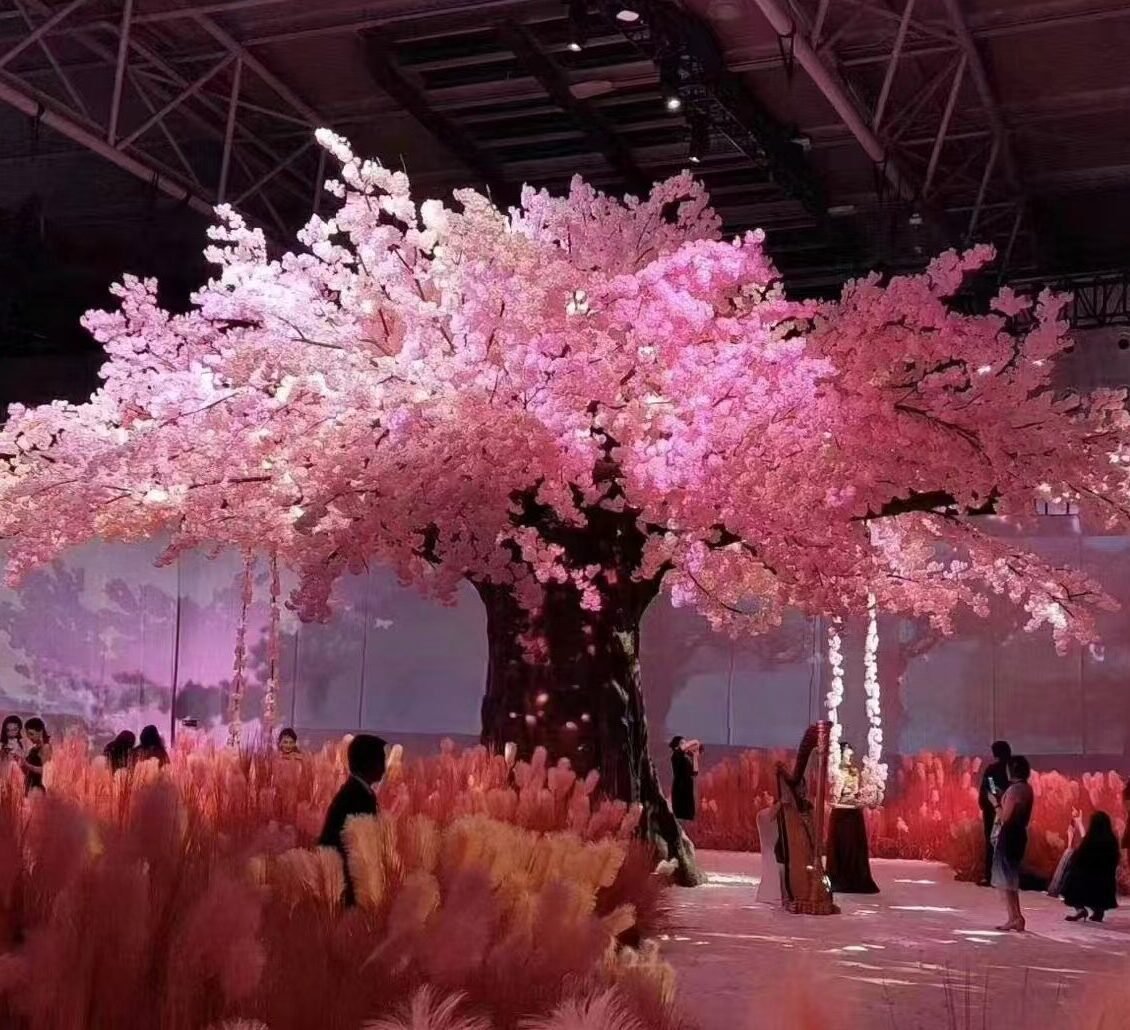
Custom artificial trees offer tailored aesthetics and low maintenance for commercial and residential spaces. This article outlines the production process—from design to delivery—and the advantages of partnering with a specialized manufacturer.
In modern interior design and commercial landscaping, artificial trees have become an important decorative element for creating a natural and aesthetically pleasing atmosphere. Consequently, hotels, restaurants, shopping centers, office buildings, and high-end residential projects increasingly favor custom artificial trees, as they deliver a highly realistic natural appearance while eliminating the ongoing maintenance costs and complexities associated with live plants.
However,different projects often have distinct design requirements, and standard off‑the‑shelf products may not precisely match the desired dimensions, style, or brand identity. Consequently, selecting a professional custom artificial tree manufacturer is critical to ensuring the success of a project. A reliable manufacturer can transform a client’s design concept into a high‑quality artificial landscape product through expert design, careful material selection, skilled handcrafting, and rigorous quality control.
As a specialist in this field, LANSELVA offers end‑to‑end custom solutions to clients worldwide, from initial concept to final delivery.
Why Choose Custom Artificial Trees?
In fact, every commercial space has its own unique design language. For example:
- A luxury hotel lobby may require a large custom olive tree with an antique‑looking trunk to serve as the central visual focus.
- A tropical resort might need oversized custom palm trees to reinforce an immersive environment.
- A shopping mall could require dozens of trees with a consistent appearance for use in atriums or circulation nodes.
- A themed restaurant may want trees that echo its brand narrative.
Customization allows for flexible adjustments based on project specifications, including:
- Tree height and overall proportions
- Canopy shape and branch distribution
- Leaf density and colour layering
- Trunk texture and aged effects
- Planter or base design
- On‑site installation and fixing methods
Compared with standard products, a custom approach ensures that the artificial trees integrate precisely with the spatial design, resulting in a distinctive and cohesive environment.
Standard Production Process for Custom Artificial Trees
To achieve these objectives, a professional manufacturer typically follows a systematic process to guarantee that every custom tree meets the required standards of realism and structural integrity.
Project Consultation and Requirement Definition
Every custom project begins with a thorough understanding of the client’s needs. The manufacturer assesses:
- Installation location and spatial dimensions
- Design style and ambiance
- Indoor or outdoor usage conditions
- Budget and delivery timeline
Clients are usually able to provide:
- Reference images
- Architectural or interior design drawings
- Renderings or concept sketches
- Clear size and quantity requirements
Based on this input, the factory develops an initial product proposal. For instance, a five‑star hotel may need a 5‑metre‑tall custom olive tree as the lobby centrepiece, while a Mediterranean‑themed restaurant might prioritise a trunk with pronounced ageing effects and a distinctive silhouette.
Tree Structure Design
Once the requirements are confirmed, the design team proceeds with detailed structural planning, covering:
- Overall height and branch layout
- Canopy contour and visual weight
- Proportional relationships among branches
It is important to note that high‑quality artificial trees should avoid perfect symmetry. Naturally grown trees exhibit irregular branching rhythms and directional variations, and these subtle asymmetries are key to enhancing realism.
Trunk Design and Material Selection
The trunk is a core element determining the overall quality and character of the artificial tree. Depending on the project’s needs, options include:
- Fibreglass‑reinforced plastic (FRP) trunks, suitable for standardised production with high strength
- Processed natural wood trunks, offering greater authenticity
- Simulated bark finishes for detailed texture
- Antiqued or weathered treatments to enhance the sense of age and artistic value
For high‑end commercial spaces, a trunk with pronounced grain and weathering effects can significantly elevate the product’s aesthetic and narrative impact.
Leaf and Auxiliary Material Selection
The choice of materials directly affects the tree’s appearance, durability, and environmental adaptability. A professional manufacturer matches materials to the specific conditions of the installation site (indoor/outdoor, sunlight exposure, humidity, etc.).
Common leaf materials include:
- PE (polyethylene) leaves, suitable for outdoor use with good UV resistance
- Silk‑like fabric leaves, offering a softer touch and a more natural visual effect
- Flame‑retardant or anti‑static treated materials for applications with specific safety requirements
Internal steel frameworks are often incorporated into large trees to ensure structural stability during transport and installation.
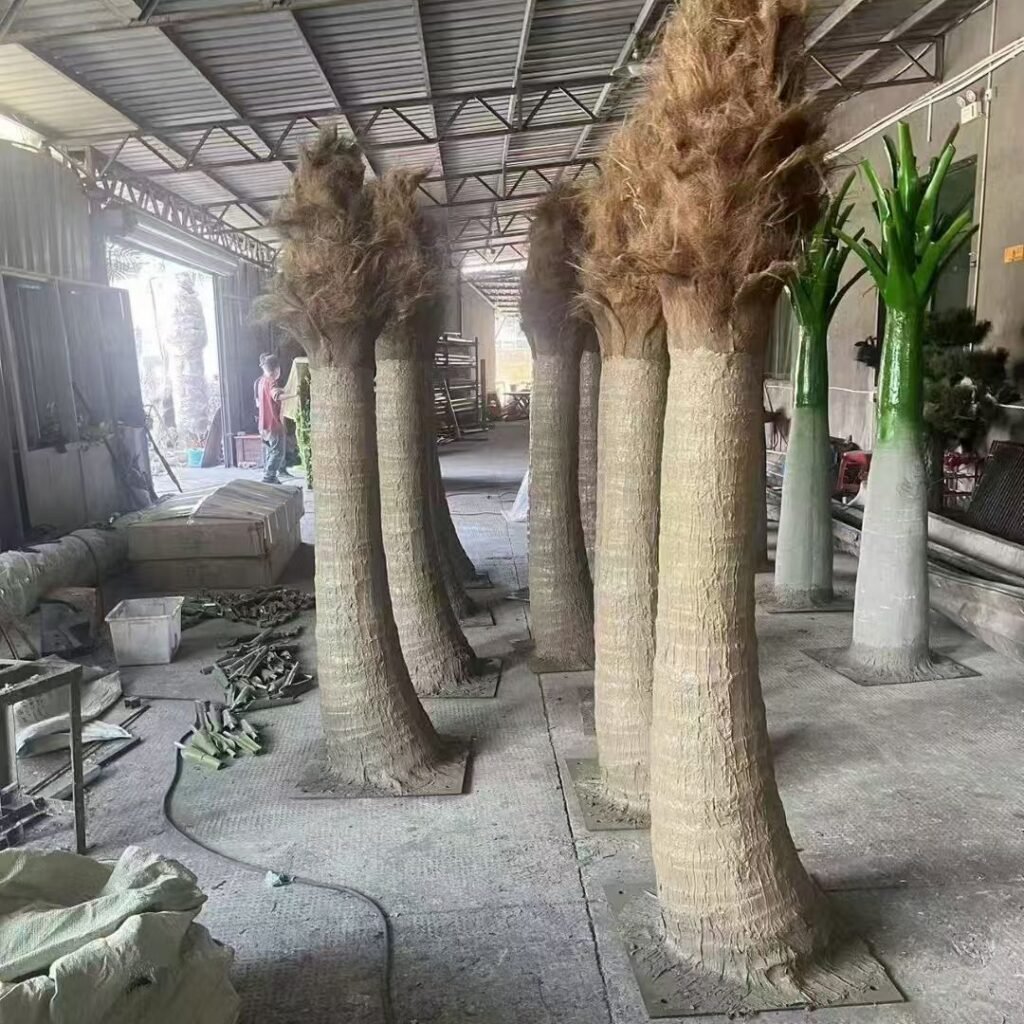
Handcrafting and Process Execution
Unlike mass‑produced decorative items, high‑quality custom artificial trees rely heavily on manual craftsmanship. The main production steps are:
- Trunk fabrication: Shaping, texture carving, multi‑layer painting, and ageing treatments to achieve a natural bark‑like surface.
- Branch assembly: Skilled technicians gradually position and angle each branch according to the design drawings, creating a well‑balanced and naturally growing form.
- Leaf attachment: Each leaf is fixed individually onto the branches, with continuous adjustments to density, orientation, and layering to ensure a full canopy that does not appear stiff or repetitive.
This handcrafted process gives each custom tree a degree of uniqueness and reflects the manufacturer’s level of expertise.
Final Quality Inspection
Before leaving the factory, every artificial tree undergoes a comprehensive quality check, covering:
- Overall structural stability and safety margins
- Leaf density and colour consistency
- Fidelity of surface details to the design specification
- Adequacy of the packaging solution for long‑distance transportation
For large‑scale commercial projects, manufacturers typically provide production process photos, finished product videos, or third‑party inspection services to allow clients to verify the product prior to shipment.
Customised Packaging and Logistics Support
Large artificial trees require bespoke packaging to prevent damage during transit. A reliable supplier takes into account:
- Product securing and cushioning methods
- Custom wooden crates or reinforced cartons
- Logistics planning for sea, air, or land freight
- Customs clearance and on‑site unloading assistance
For international clients, manufacturers can also offer door‑to‑door delivery and project‑specific logistics coordination.
Typical Application Scenarios for Custom Artificial Trees
Custom artificial trees are widely used across various commercial and residential sectors:
- Hospitality projects: Used in lobbies, lounge areas, or suite balconies to create a relaxed and welcoming atmosphere. Popular choices include custom olive trees, banyan trees, and palm trees.
- Food and beverage spaces: Trees can be tailored to match restaurant themes – for example, aged olive trees for Mediterranean eateries, tropical palms for island‑style venues, and more artistic sculptural trees for fine dining establishments.
- Retail and commercial spaces: Large artificial trees are often placed in atriums, main entrances, or display zones as visual landmarks, enhancing customer dwell time and brand recall.
- High‑end residential properties: In villas and penthouses, custom artificial trees are frequently used as focal points in indoor gardens or connecting corridors, offering both aesthetic appeal and low maintenance.
Key Advantages of Working Directly with a Manufacturer
Choosing a direct factory partnership, rather than going through intermediaries, typically provides the following benefits:
- Professional customisation capabilities: The factory can flexibly adjust forms, materials, and processes according to project requirements, without being constrained by existing product lines.
- Quality control: From raw material procurement to production workflows, the manufacturer maintains closed‑loop oversight, ensuring consistent output quality.
- Cost efficiency: By eliminating intermediate margins, clients often obtain better value for money at equivalent quality levels.
- Full‑service support: A specialised factory can provide comprehensive assistance, including design advice, production scheduling, progress updates, and logistics solutions.
LANSELVA: Your Custom Artificial Tree Partner
LANSELVA focuses on the design and manufacture of premium artificial trees, offering customised solutions to clients around the globe. Our main product lines include:
- Custom olive trees
- Custom palm trees
- Custom cherry blossom trees
- Custom banyan trees
- Various bespoke landscape trees
With a mature craftsmanship system and extensive project experience, LANSELVA has served numerous international hotel groups, commercial real estate developers, and renowned design firms, delivering complete solutions from concept design to on‑site installation.
Conclusion
Custom artificial trees are not merely decorative objects; they are integrated design elements that combine natural aesthetics, artisanal skill, and functional requirements. Choosing a manufacturer with proven expertise ensures tangible benefits in visual impact, structural safety, product durability, and project execution efficiency.
Whether you plan to create a landmark tree for a hotel, a uniform tree array for a commercial space, or a distinctive natural element for a luxury residence, LANSELVA can provide the professional support you need based on your project specifications.
For further product details or to request a custom proposal, please feel free to contact the LANSELVA team.