
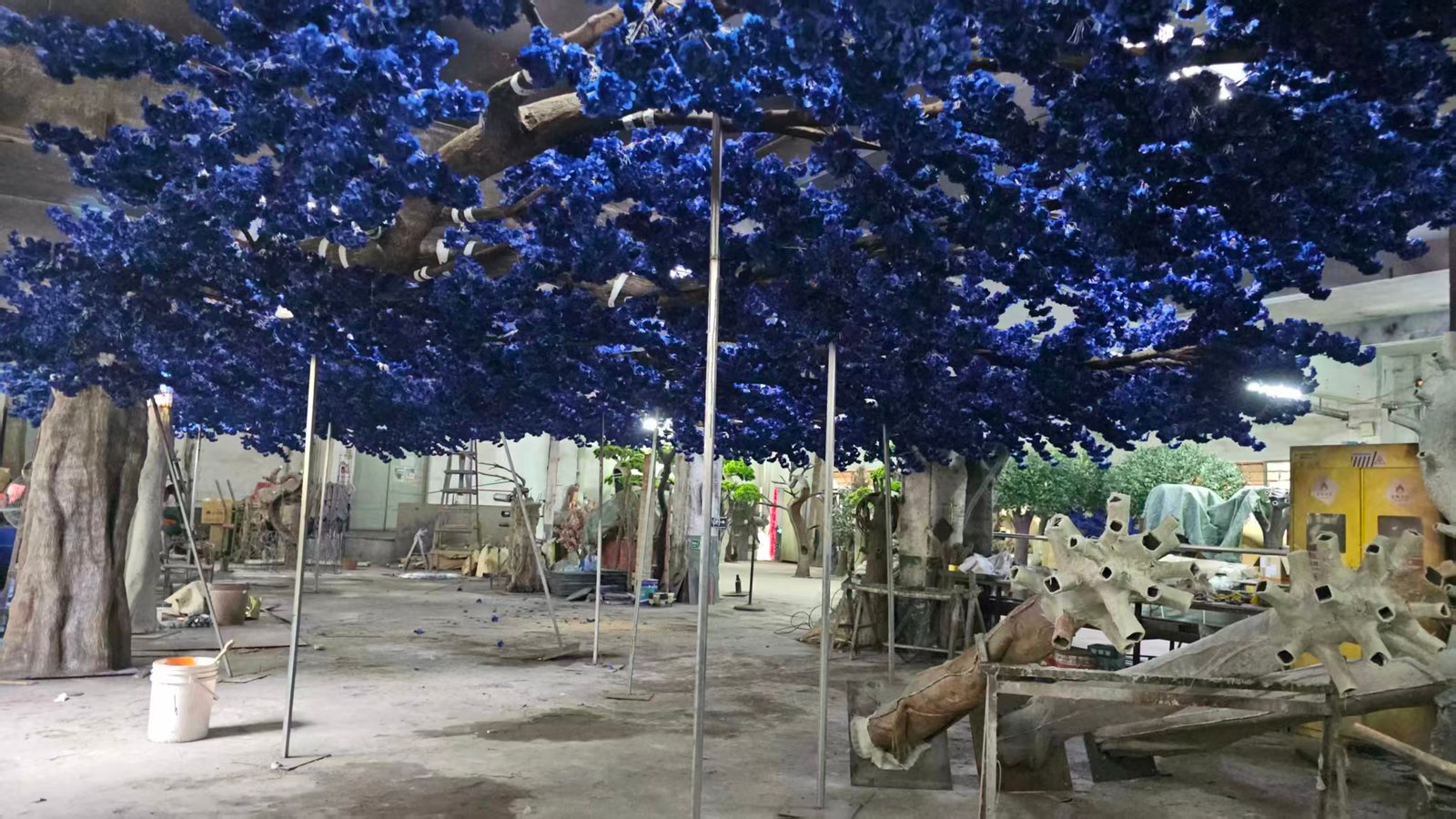
Have you ever wondered how a realistic artificial tree is transformed from a design concept into a finished product?
From elegant olive trees in luxury hotel lobbies to tropical palm trees in seaside resorts, high-quality artificial trees have become an ideal decorative solution for commercial spaces and premium residential projects. They not only eliminate the need for watering, pruning, and pest control but also maintain their natural beauty throughout the year.
So, how are artificial trees actually made?
In this article, we will take you through the complete manufacturing process and reveal the craftsmanship behind realistic artificial trees.
Starting with Design: Creating a Customized Tree for Every Project
The production of an artificial tree always begins with professional design planning.
At this stage, manufacturers communicate with customers in detail to confirm key requirements, including:
- Tree type (artificial olive tree, artificial palm tree, artificial cherry blossom tree, etc.)
- Tree height and canopy size
- Installation location (indoor or outdoor)
- Design style (modern, vintage, natural style, etc.)
- Desired level of realism
For customized projects, customers usually provide:
- Reference images
- Architectural drawings
- Interior design concepts
- Specific size requirements
Professional designers then create a 3D structural design of the tree to ensure that the final product perfectly matches the project space in both size and appearance.
It is important to note that design is not simply about creating a drawing. It is a combination of aesthetics and engineering. The tree must look natural and lifelike while also maintaining structural stability and easy installation.
Selecting Premium Materials: The Key to Realism and Durability
Choosing the right materials determines whether an artificial tree can achieve both a realistic appearance and long-lasting performance.
Different types of artificial trees require different materials based on their application.
Leaf Materials — The Most Visible Element
PE (Polyethylene) Leaves
PE leaves are widely used in high-quality artificial trees because they offer:
- Realistic texture
- Excellent flexibility
- High durability
- Good UV resistance
They are especially suitable for:
- Artificial palm trees
- Artificial olive trees
- Large outdoor landscape trees
Silk Leaves
Silk leaves provide:
- Soft texture
- Natural movement
- Premium visual appearance
They are commonly used for:
- Indoor decorative trees
- Luxury interior projects
UV-Resistant Materials
For artificial trees used in outdoor environments exposed to sunlight for long periods, UV-resistant materials help prevent:
- Color fading
- Material aging
- Weather damage
Trunk Materials — The Soul of Realism
The trunk plays a crucial role in creating a realistic artificial tree.
Fiberglass (FRP) Trunks
Fiberglass is widely used for large artificial trees because it offers:
- High strength
- Lightweight structure
- Corrosion resistance
- Long service life
The surface can be handcrafted with details such as:
- Bark textures
- Natural cracks
- Wood knots
After professional coloring and finishing, fiberglass trunks can achieve an extremely realistic natural appearance.
Natural Wood Trunks
Some premium artificial trees use real natural trunks or large branches.
Each piece of natural wood has unique:
- Grain patterns
- Shapes
- Growth characteristics
This gives the tree strong artistic value and makes every piece unique.
Natural wood trunks are especially popular for:
- Boutique hotels
- Luxury restaurants
- High-end commercial projects
Internal Structure: Making Large Trees Stable and Secure
For large artificial trees over 2 meters tall, a strong internal support structure is essential.
Manufacturers usually use:
- Galvanized steel structures
- Aluminum alloy frames
- Reinforced connection systems
These structures ensure that the tree remains:
- Stable
- Safe
- Resistant to tilting or deformation
This step is especially important because it directly affects the product’s safety and service life.
Branch Assembly: Creating a Natural Growth Appearance
After the trunk is completed, workers begin installing the main branches and side branches.
This is not simply a process of attaching branches together. Experienced craftsmen carefully adjust each branch according to natural tree growth patterns.
They carefully control:
- Branch angles
- Branch directions
- Spacing between branches
Instead of arranging branches in a perfectly symmetrical way, craftsmen create a more natural and irregular structure.
At the same time, they consider the overall balance and center of gravity, ensuring that the tree looks naturally beautiful from every angle.
This handmade adjustment is one of the key differences between ordinary mass-produced artificial trees and premium customized products.
Leaf Installation and Shaping: Creating the Tree One Leaf at a Time
Leaf installation is one of the most time-consuming and detail-oriented steps in artificial tree production.
Workers manually attach hundreds or even thousands of leaves onto branches, carefully adjusting:
- Leaf direction
- Leaf density
- Overall canopy layers
This process recreates the natural fullness and depth of a real tree crown.
After installation, the tree undergoes final shaping.
Craftsmen adjust the branches through:
- Bending
- Stretching
- Reshaping
to create a fuller canopy and more elegant outline.
The process requires repeated inspection and adjustment until the final appearance matches the original design.
Surface Finishing and Detail Creation: Adding a Sense of Time and Nature
To make an artificial tree look like a real tree, details are essential.
During this stage, craftsmen add realistic features to the trunk and branches, including:
- Hand-painted color variations on the bark to simulate natural light and shadow effects
- Aged details such as moss, tree holes, or peeling bark
- Localized leaf coloring to imitate natural characteristics such as dry leaf tips or surface shine
These subtle details transform artificial trees from ordinary industrial products into artistic pieces with warmth and character.
Strict Quality Inspection: Ensuring Every Tree Meets Standards
Before shipment, every artificial tree must pass multiple quality inspections.
The inspection process includes:
Appearance Inspection
Checking:
- Leaf density
- Color consistency
- Overall shape
- Decorative details
Structural Testing
Checking:
- Trunk strength
- Branch connection stability
- Overall structural safety
Packaging Inspection
Ensuring that protective measures are properly prepared to prevent damage during transportation.
Only products that pass all inspections are approved for delivery.
Professional Packaging and Global Shipping
Large artificial trees often have:
- Large dimensions
- Irregular shapes
- Complex structures
Therefore, packaging is also an important part of the manufacturing process.
Manufacturers usually create customized packaging solutions, including:
- Wooden crates
- High-strength cartons
- Protective filling materials
- Clear handling instructions
For international customers, manufacturers can provide various shipping options, including:
- Sea freight
- Air freight
- Door-to-door delivery services
to ensure products arrive safely and on time at the project location.
Why Choose a Professional Artificial Tree Manufacturer?
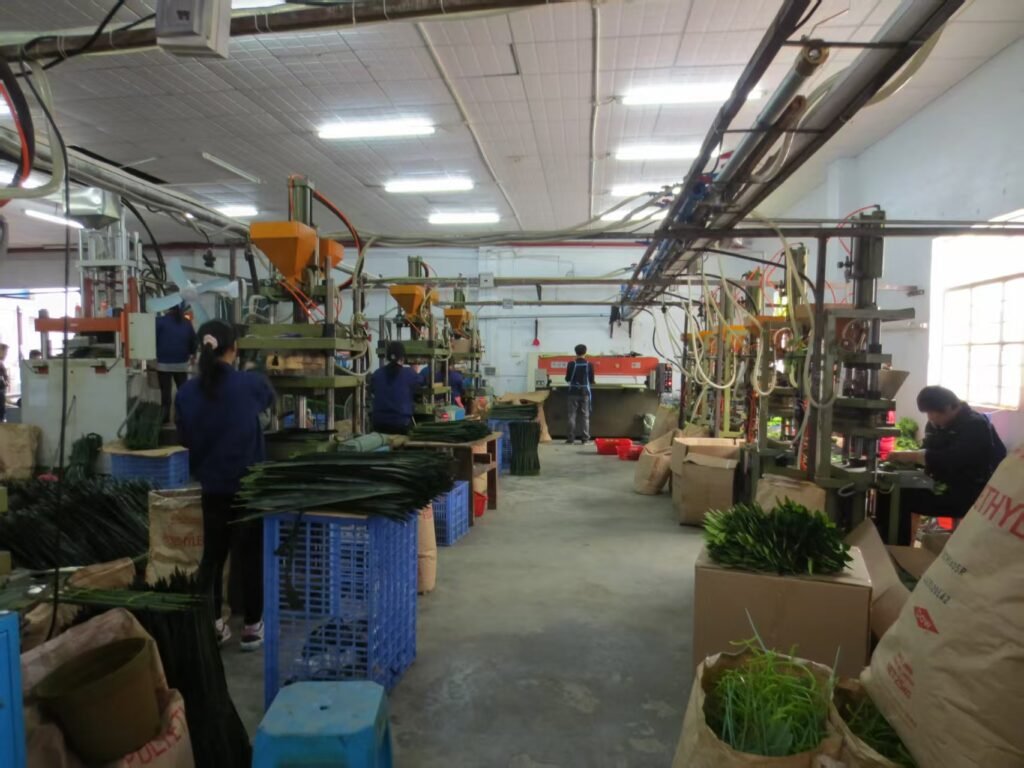
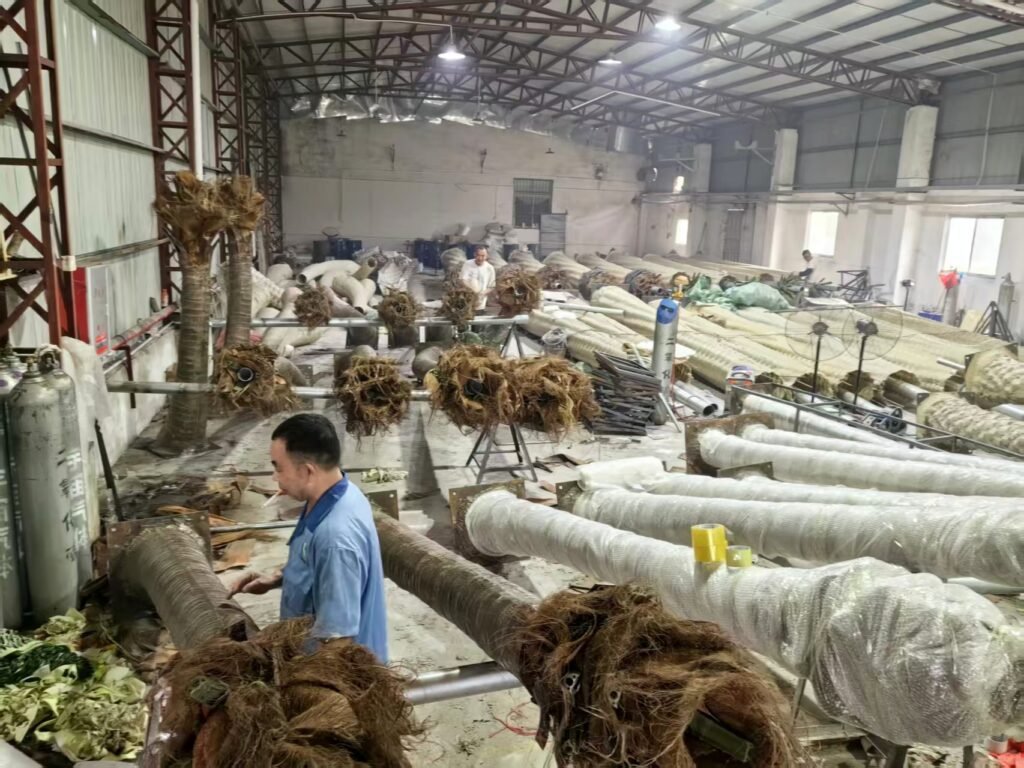
The difference between ordinary artificial trees and professional customized products is often reflected in:
- Product details
- Durability
- Manufacturing quality
- Customer service
By choosing an experienced manufacturer like LANSELVA, customers can benefit from:
Higher Realism
Created through:
- Professional design
- Skilled craftsmanship
- Attention to detail
Flexible Customization Options
Including customization of:
- Tree size
- Tree shape
- Colors
- Trunk style
- Decorative pots
Reliable Quality Assurance
Strict quality control from raw materials to finished products.
Extensive Project Experience
Serving various applications, including:
- Hotels
- Shopping malls
- Restaurants
- Real estate showrooms
- Commercial decoration projects
About LANSELVA
LANSELVA is a global supplier specializing in the design and manufacturing of high-end artificial trees.
Our products include:
- Artificial olive trees
- Artificial palm trees
- Artificial cherry blossom trees
- Artificial ficus trees
- Custom landscape trees
We are committed to combining natural aesthetics with professional manufacturing techniques, providing vibrant decorative solutions for commercial spaces and private residences worldwide.
Conclusion: The Craftsmanship Behind Every High-Quality Artificial Tree
The creation of a premium artificial tree is far more than simple mold production.
It is a sophisticated process that combines:
- Design
- Material selection
- Handmade craftsmanship
- Quality inspection
From the initial design concept to the final wooden crate packaging, every step reflects the dedication and expertise of skilled craftsmen.
Whether you are a hotel owner, interior designer, landscape professional, or real estate developer, choosing a professional artificial tree manufacturer means choosing a long-lasting decorative solution with natural beauty and artistic value.
If you have any questions about customized artificial trees or decoration solutions, please feel free to contact us.
LANSELVA — Creating natural beauty and inspiring spaces with realistic artificial trees.