
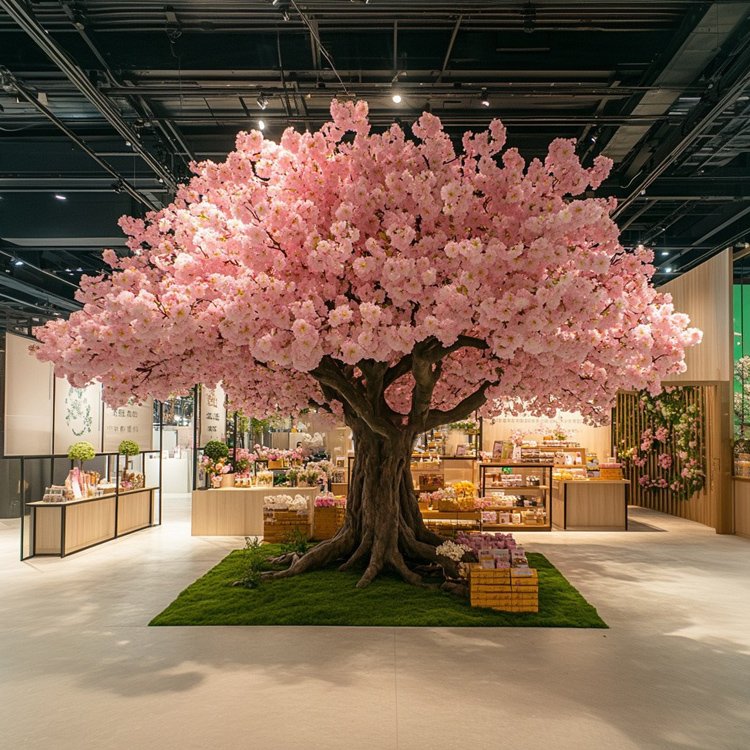
Selecting the right size artificial tree is a crucial step in decorating any interior or commercial space. A well-proportioned artificial tree not only serves as a striking visual anchor but also enhances the overall ambiance, bringing a sense of nature, vitality, and sophistication—without the ongoing maintenance that live plants require.
However, choosing the wrong size can undermine the entire design. An undersized tree may feel insignificant and out of scale, while an oversized one can make the space feel cramped and obstruct movement.
Whether you are designing:
Atri degli hotel
Ristoranti
Centri commerciali
Spazi per uffici
Commercial showrooms
Residenze di lusso
Understanding how to match tree height, canopy spread, and overall proportion to your space is key to achieving a harmonious and impressive result.
This guide outlines the critical factors to consider when sizing artificial trees and helps you find the best solution for your project.
1. Start with Ceiling Height
The first consideration is the vertical space available. The tree should complement the room’s height—not dominate it or get lost.
As a general rule, leave a comfortable gap between the top of the tree and the ceiling. A tree that brushes the ceiling feels oppressive, while one that’s too short fails to make an impact.
Recommended tree heights by ceiling height:
Ceiling height: 2.5–3 m → Recommended tree height: 1.5–2.2 m
Ideal for living rooms, apartments, small offices, cafés, and reception areas. Choose lighter, space-saving varieties such as small olive trees, fiddle-leaf figs, cherry blossom trees, or potted topiaries.
Example: A 2 m olive tree fits neatly in a living room corner, office entrance, or restaurant lounge area, adding greenery without intruding on walkways.
Ceiling height: 3–5 m → Recommended tree height: 2.5–4 m
Suited for hotel entrances, restaurant halls, mall corridors, upscale residences, and showrooms. These mid-sized trees create a noticeable visual presence without overwhelming the space. Popular choices include olive trees, banyan trees, maples, and cherry blossoms. For hotels and commercial venues, this range is the most commonly used.
Ceiling height: 5 m+ → Recommended tree height: 5 m+ (large-scale trees)
Perfect for five-star hotel atriums, mall courtyards, resorts, large exhibition halls, and expansive commercial areas. Tall spaces call for dramatic impact. Common options include large palm trees, giant banyans, and custom-designed landscape trees.
Example: In an 8 m high hotel lobby, a 2 m tree would be dwarfed; a 5–6 m specimen, however, becomes a breathtaking centerpiece.
2. Measure Available Floor Space
Height alone isn’t enough—canopy width is equally important. Many buyers ask only, “How tall is it?” but forget to ask, “How wide does it spread?”
Before purchasing, measure:
The intended placement area
Distance from walls
Clearances between furniture
Pedestrian traffic paths
Surrounding décor dimensions
For instance, a 4 m olive tree may have a canopy diameter of 2.5–3 m. It works beautifully in a hotel lobby or spacious restaurant, but would overwhelm a small room.
3. Match Size to Space Type
Different spaces have different needs. Consider not only square footage but also the tree’s functional role in the design.
Alberghi
Hotels often aim for a grand first impression, so larger trees are preferred.
Front desk / reception areas: 2.5–3.5 m – ideal for lobbies, front-backdrop zones, and elevator foyers.
Central lobby / atrium: 4–6 m – suited for five-star hotels, luxury resorts, and high-end commercial spaces. Recommended species: olive, palm, banyan, or custom large landscape trees.
Large atriums: 6 m+ custom trees – for mall courtyards, soaring hotel lobbies, and exhibition entrances. These often require bespoke design (trunk height, canopy diameter, branch structure, and installation method).
Restaurants & Cafés
Here, the goal is a cozy, inviting, and characterful dining atmosphere.
Small restaurants / cafés: 1.5–2.2 m – placed against walls, beside tables, or in cozy corners. Choose small olive trees, potted plants, or cherry blossoms.
Mid-size restaurants: 2.5–3.5 m – suitable for entrances, private dining rooms, or lobby corners.
High-end / trendy restaurants: 3.5 m+ – large statement trees enhance brand image and create a memorable dining experience.
Office Spaces
Modern offices prefer clean, professional environments with natural accents.
Reception areas: 1.8–2.5 m – olive, fiddle-leaf fig, or areca palm work well.
Conference rooms: 1.5–2.2 m – opt for slim, unobtrusive designs.
Large office atriums / corporate headquarters: 3 m+ – ideal for public lounges and expansive lobbies.
4. Choose the Right Canopy Shape and Density
Two trees of the same height can look completely different depending on their canopy design.
Full Canopy – Dense foliage offers strong visual impact and fills empty volumes. Perfect for hotel corners, mall atriums, and large commercial projects. Consider banyan trees or large olive trees.
Narrow Canopy – Slim profiles save floor space and work well in corridors, hallways, and small areas without blocking passage. Examples: cypress or slim palm varieties.
Wide Decorative Canopy – Broad, showy crowns become instant focal points. Great for hotel lobbies, wedding backdrops, and premium retail. Large olive or cherry blossom trees fit this category.
5. Consider Viewing Distance
Proximity affects how the tree is perceived.
Close viewing (e.g., beside restaurant seating, shop entrances, reception desks):
Choose 1.5–3 m trees with finer leaf details, realistic branch structures, and natural trunk textures, as quality matters up close.
Distant viewing (e.g., hotel lobby center, mall courtyard, large exhibition hall):
Opt for 3 m+ trees with broader canopies and strong silhouettes. Large commercial projects often require custom sizing to ensure visual balance from afar.
6. Why Choose Custom Artificial Trees for Large Projects?
For hotels, resorts, shopping centers, and mixed-use developments, standard sizes may not suffice. Customization allows you to adjust:
Overall height and canopy diameter
Branch density and spread angle
Trunk shape (curved, multi-branch, or sculptural)
Material specifications (indoor-grade, outdoor UV-protected, or fire-retardant for commercial use)
Professional manufacturers work with architects and designers to create trees that perfectly match the building’s dimensions and design intent.
Lanselva specialises in custom artificial trees for commercial spaces, offering:
Alberi di ulivohttps://lanselva.com/artificial-trees/large-artificial-olive-tree/
Palmehttps://lanselva.com/artificial-trees/large-artificial-palm-trees/
Banyan treeshttps://lanselva.com/artificial-trees/large-artificial-banyan-tree/
Cherry blossom treeshttps://lanselva.com/artificial-trees/large-artificial-cherry-blossom-trees/
Large bespoke landscape treeshttps://lanselva.com/artificial-trees/large-artificial-wisteria-tree/
7. Common Sizing Mistakes to Avoid
Mistake 1: Choosing a tree that’s too small
Example: A 5 m high lobby with only a 1.8 m tree.
Result: Lacks presence and fails as a focal point.
Solution: Select a taller tree or use a grouped arrangement.
Mistake 2: Choosing a tree that’s too large
Example: Installing a 5 m tree in a small restaurant.
Result: Creates a cramped feeling and obstructs movement.
Solution: Always measure ceiling height, floor area, and traffic routes beforehand.
Mistake 3: Focusing only on height and ignoring canopy width
Many ask for “a 3 m tree” without checking its spread.
Solution: Always confirm both Tree Height and Canopy Diameter before ordering.
FAQ – Artificial Tree Sizing
Q1: What height is recommended for a hotel lobby?
Typically 3–6 m, depending on ceiling height, lobby area, and design style. For large five-star hotels or commercial atriums, consider 6 m+ custom trees.
Q2: What size works for a 2.4 m ceiling?
Recommend 1.8–2.1 m – this leaves a comfortable gap and maintains natural proportions.
Q3: Are large artificial trees suitable for indoor use?
Absolutely. They are widely used in hotels, restaurants, malls, offices, and showrooms. Benefits: no sunlight, no watering, no leaf drop, and long-lasting decorative appeal.
Q4: Can artificial trees be made to custom sizes?
Yes. Professional manufacturers can tailor height, canopy size, trunk shape, leaf density, and materials to your exact project requirements.